Petrol Car vs Hybrid Car vs Electric Car in India 2026: Which One Is Better to Buy?
Petrol Car vs Hybrid Car vs Electric Car in India: Which Car Type Is the Right Choice in 2026?
In 2026, Indian car buyers are actively comparing petrol car, hybrid car, and electric car options before making a purchase decision. Rising fuel prices, growing awareness about mileage, and the expansion of electric mobility have made this comparison more important than ever.
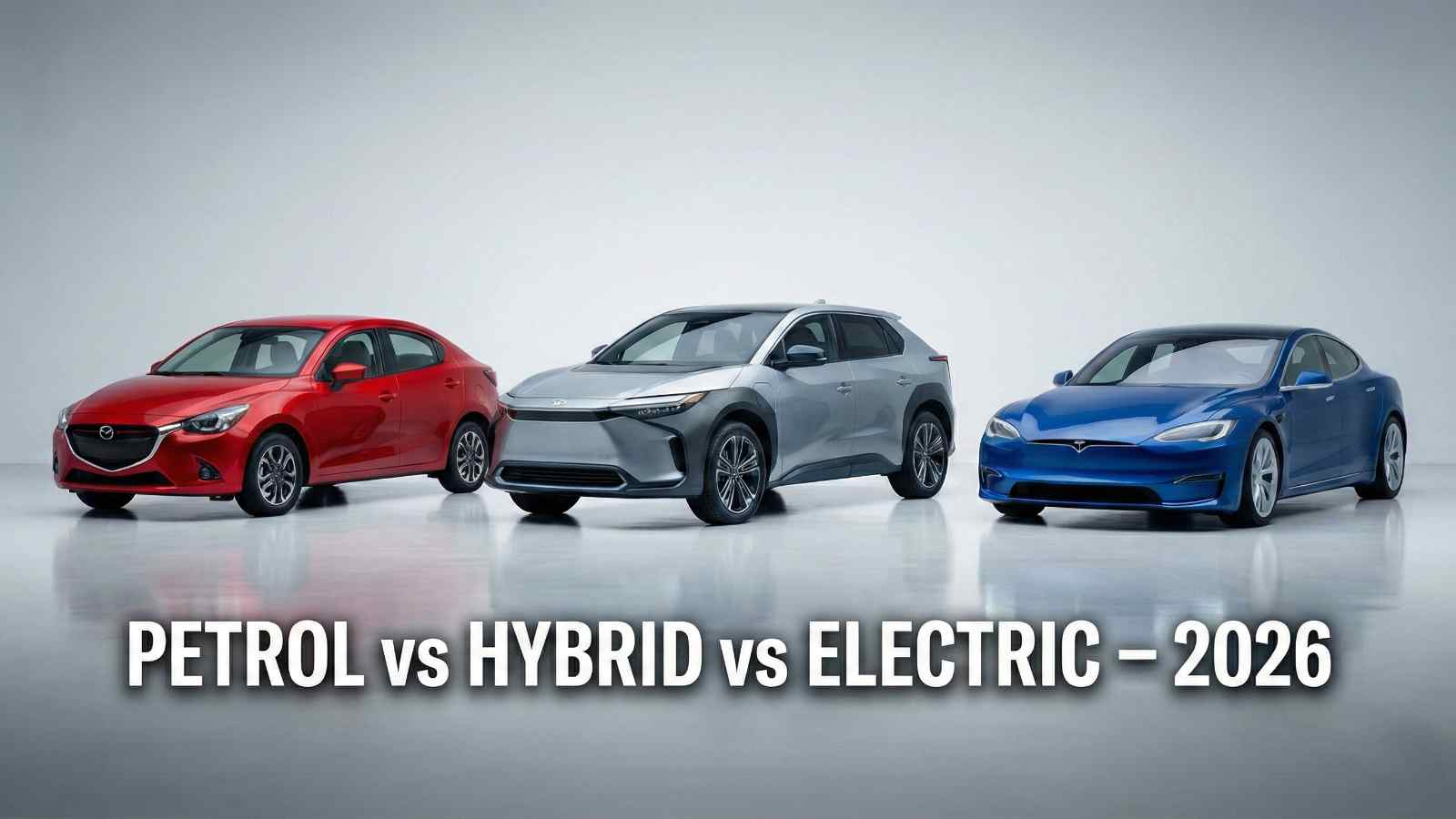
Choosing between a petrol car, a hybrid car, and an electric car depends largely on usage pattern, long-term cost, and convenience. This article provides a clear comparison of petrol car vs hybrid car vs electric car to help buyers make an informed decision in 2026.
Petrol Car vs Hybrid Car vs Electric Car: Comparison Table (2026)
| Factor | Petrol Car | Hybrid Car | Electric Car |
|---|---|---|---|
| Purchase Cost | Lowest | Medium | Highest |
| Running Cost | High | Low | Very Low |
| Maintenance Cost | Medium | Low | Very Low |
| Mileage / Range | 15–20 km/l | 25–30 km/l | 300–450 km |
| Refuelling / Charging | Easily available | Easily available | Charging required |
| Best Usage | Low driving | Daily mixed use | City driving |
Petrol Car in India (2026): Advantages and Limitations
A petrol car continues to be the most common choice among Indian buyers. The biggest advantage of a petrol car is its low upfront cost and easy availability of fuel across the country.
Advantages of a Petrol Car
- Lower purchase price compared to hybrid car and electric car
- Simple technology and easy maintenance
- Suitable for buyers with low monthly usage
Limitations of a Petrol Car
- Higher running cost due to fuel prices
- Lower mileage compared to a hybrid car
- Not future-focused compared to an electric car
A petrol car is best suited for buyers who drive occasionally and want a straightforward ownership experience.
Hybrid Car in India (2026): Advantages and Limitations
A hybrid car combines a petrol engine with electric assistance, offering significantly better fuel efficiency. In 2026, a hybrid car is considered the most balanced option for Indian road conditions.
Advantages of a Hybrid Car
- Much better mileage than a petrol car
- No charging dependency unlike an electric car
- Lower running cost for daily use
- Smooth city driving experience
Limitations of a Hybrid Car
- Higher price than a petrol car
- Limited model availability compared to petrol car options
A hybrid car is ideal for buyers who want lower fuel costs without shifting completely to an electric car.
Electric Car in India (2026): Advantages and Limitations
An electric car represents the future of mobility in India. With zero fuel consumption and minimal maintenance, an electric car offers the lowest long-term running cost.
Advantages of an Electric Car
- Lowest running cost among petrol car, hybrid car, and electric car
- Very low maintenance
- Silent and smooth driving experience
- Environment-friendly option
Limitations of an Electric Car
- Higher upfront price
- Charging infrastructure still developing
- Not ideal for frequent long highway trips
An electric car is best suited for urban users who have access to home or office charging.
Petrol Car, Hybrid Car or Electric Car: Which Should You Buy in 2026?
- Choose a petrol car if your driving is limited and budget is tight
- Choose a hybrid car if you drive daily and want the best balance of cost and convenience
- Choose an electric car if most of your driving is within the city and charging is available
Each car type serves a different buyer profile, and there is no single best option for everyone.
Final Conclusion
In 2026, the debate between petrol car vs hybrid car vs electric car is not about which is better overall, but which is better for your specific needs. A petrol car remains affordable, a hybrid car offers the best efficiency without charging stress, and an electric car delivers the lowest long-term cost.
Understanding your usage pattern is the key to choosing the right petrol car, hybrid car, or electric car in India.