
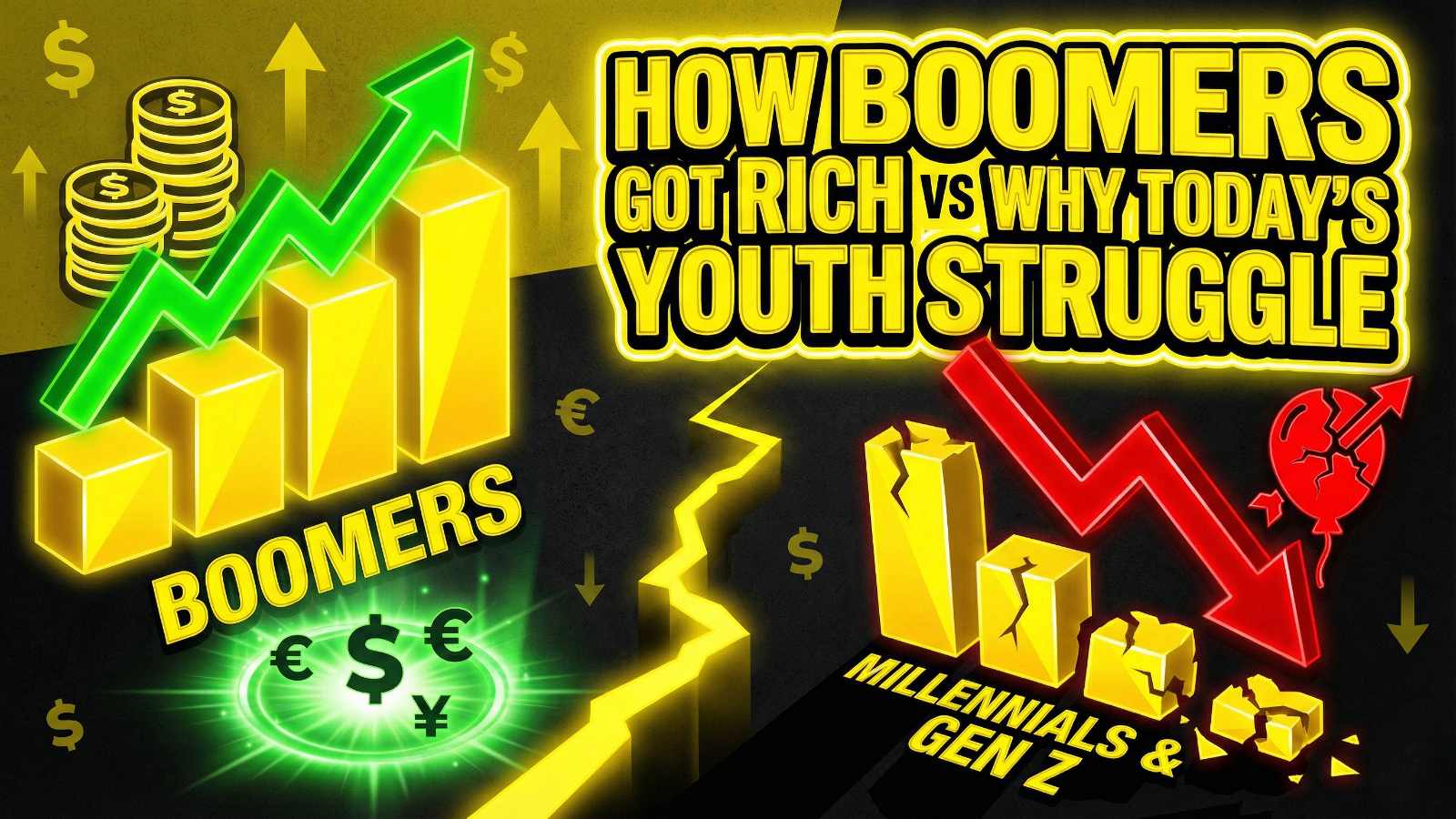
Big Reveal: How Baby Boomers Got Rich — And Why Millennials Can’t Catch Up in 2026
How Baby Boomers got Rich — And Why Their Kids Are Struggling to Catch Up: A Deep Dive Into America’s Growing Wealth Gap
Washington, D.C.: For decades, America’s Baby Boomers (born 1946–1964) have accumulated record levels of wealth — from real estate to retirement accounts to stock market holdings. But as Millennials and Gen Z enter adulthood, the financial ladder appears much steeper than ever before. Income instability, soaring housing prices, and rising costs of education have widened the nation’s wealth gap dramatically.
This analysis explores how one generation became the wealthiest in U.S. history — and why the next two generations are struggling to reach the same level.
How Baby Boomers Built Their Wealth
Economic historians agree that Baby Boomers (born 1946–1964) grew up in one of the most economically favorable periods in modern history. They benefitted from a mix of strong economic growth, cheap assets, stable jobs, and government support — factors that are extremely hard for Millennials and Gen Z to access today.
Key Factors Behind Boomer Wealth:
- Cheap Housing: Boomers bought homes when prices were low and interest rates allowed affordable ownership.
- Strong Job Market: Stable, long-term jobs with pensions and consistent wage growth were common through the 1970s–1990s.
- Booming Stock Market: They invested during decades of major market growth.
- Affordable Education: College tuition was drastically cheaper, reducing student debt.
- Economic Expansion: Post-WWII America experienced rapid industrial growth and rising productivity.
One economist notes,
“If you bought a house in the 1980s or 1990s, you were essentially buying a lottery ticket that kept paying dividends.”
Why Millennials and Gen Z Are Struggling
Unlike Boomers, today’s young adults face a hostile economic climate.
Major Barriers for Younger Generations:
- Housing Crisis: Home prices have risen far faster than wages.
- Student Debt: Millennials and Gen Z carry historic levels of education loans.
- Higher Cost of Living: Healthcare, rent, childcare, and groceries are significantly more expensive.
- Gig Economy Jobs: Employment is often unstable, lacking benefits or pensions.
- Stagnant Wages: Income growth has failed to keep pace with inflation.
The generational gap has widened to the point where economists call it “the new American divide.”
The Wealth Gap in Numbers
While the exact figures vary across reports, trends show the same picture:
- Baby Boomers hold over 50% of total American wealth.
- Millennials hold less than 10%, despite representing a similar share of the workforce.
- Gen Z is entering adulthood with the highest cost of living in U.S. history.
Financial analysts warn that unless wages, housing policy, and education costs change, the gap will continue to expand.
Why Catching Up Is Nearly Impossible
Even Millennials and Gen Z who work hard, save consistently, and invest early often cannot match the starting advantage Boomers enjoyed.
Structural Challenges Include:
- Housing supply shortages
- Wage stagnation
- Rising interest rates
- Decline of pension systems
- Increasing healthcare premiums
- Economic inequality across regions
A labor expert summarised it bluntly:
“Today’s young Americans aren’t less hardworking — they’re competing in a completely different economy.”
What Could Change the Future?
Policy experts believe the wealth gap may shrink only if major reforms are adopted:
- Affordable housing programs
- Relief for student loan borrowers
- Higher minimum wages
- Better access to retirement plans
- Encouraging home ownership for young families
- Tax reforms targeting wealth concentration
Without intervention, analysts warn the intergenerational wealth divide may shape America’s political and social landscape for decades.
Conclusion: A Tale of Two Economies
Baby Boomers rode an economic wave that built unmatched prosperity.
Millennials and Gen Z, meanwhile, are navigating a tougher, costlier, and more competitive system.
The gap between generations is no longer just financial — it is reshaping expectations, lifestyles, and the American dream itself.






It the same situation in Europe specialy in France.