
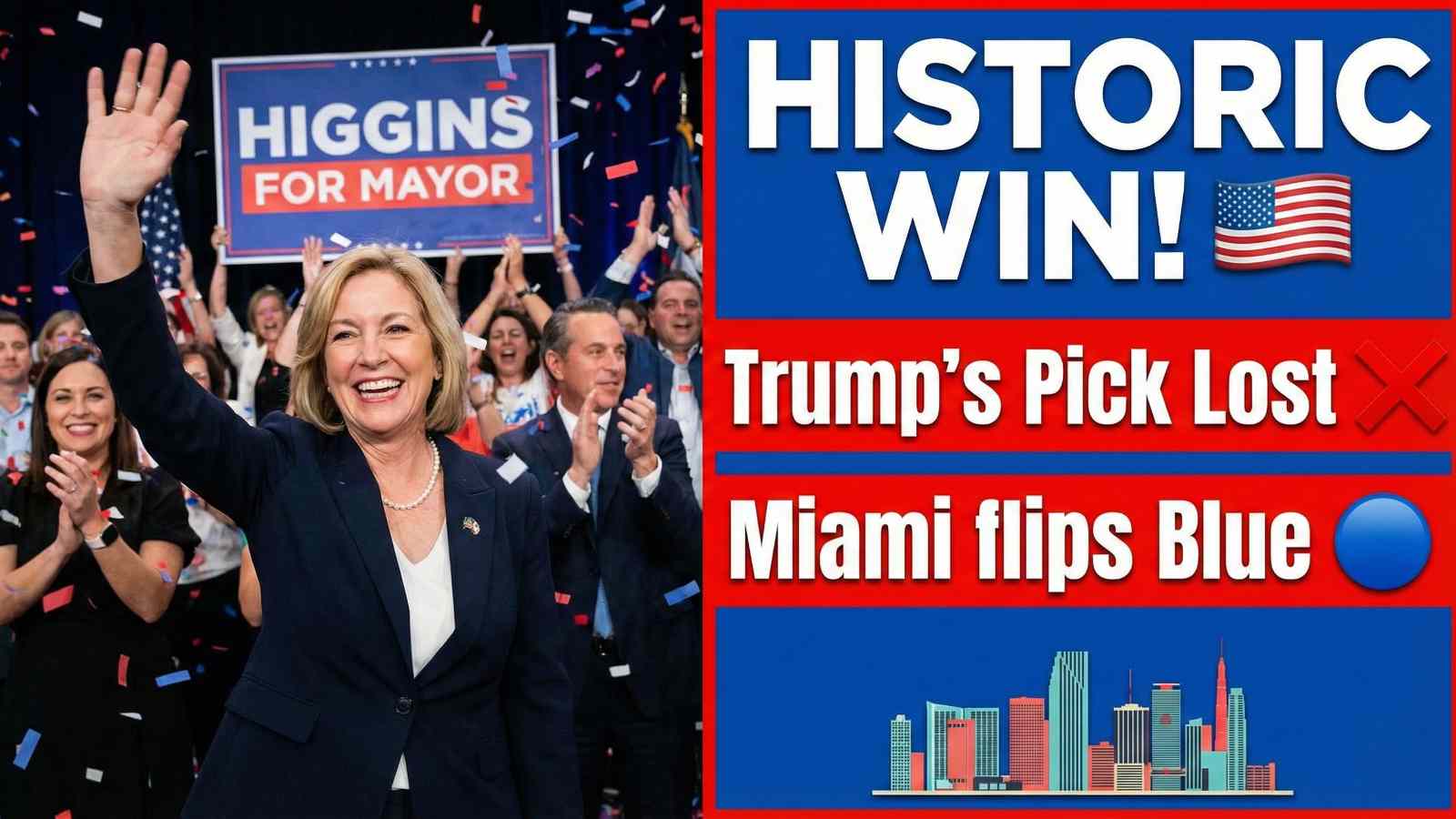
History in Miami: Eileen Higgins Becomes First Female Mayor, Ending 30-Year Republican Rule
Miami Election Shock: Eileen Higgins Wins Mayoral Runoff, Breaks 30-Year Republican Hold
Miami, Florida: Florida’s political landscape was shaken on Wednesday after Eileen Higgins, a former Miami-Dade County Commissioner, scored a stunning victory in the Miami mayoral runoff election. Her win marks a historic turning point for a city that has remained under Republican leadership for nearly three decades.
As vote counts were finalized early Wednesday morning, Higgins quickly emerged as one of the most talked-about political figures in the United States, with her victory seen as both symbolic and strategically significant at the national level.
Breaking a 30-Year Political Streak
For almost 30 years, Miami had been firmly controlled by Republican mayors, bolstered primarily by strong conservative support among the Cuban-American community. The city had long been viewed as a reliable GOP stronghold, particularly during national elections.
But this cycle, voters delivered a dramatic shift.
The Results
Higgins defeated Republican challenger Emilio González, who had the backing of former President Donald Trump, by a decisive 59% of the vote—a margin far larger than many analysts had predicted.
The History
With this victory:
- Eileen Higgins becomes the first Democrat to serve as Miami’s mayor since 1997.
- She also becomes the first woman ever elected mayor of Miami.
The double milestone adds historic weight to what many now describe as one of Florida’s most politically significant local elections in recent memory.
Why Is Eileen Higgins Trending? The ‘La Gringa’ Factor
Higgins’ rise is especially notable given Miami’s demographic makeup. More than 70% of the city’s population is Hispanic, while Higgins herself is non-Hispanic—a background that traditionally has been considered a disadvantage in local political races.
Instead of avoiding the contrast, Higgins embraced it.
She adopted the nickname “La Gringa,” using it as a bridge to Spanish-speaking communities, particularly in neighborhoods like Little Havana. Her approachable campaign style and efforts to communicate directly with residents broke down longstanding cultural and political barriers.
Political commentators are now interpreting her win as a clear rebuke of “MAGA-style” local campaigning, suggesting voters prioritized governance and tangible problem-solving over ideological rhetoric.
Campaign Promises: What Higgins Pledged
Running on a platform of “Ethical Leadership,” Higgins positioned herself as a reform candidate—an explicit contrast to the corruption controversies that have periodically plagued Miami City Hall.
Her primary commitments include:
- Addressing the affordable housing crisis: Miami continues to face some of the highest rental costs in the Southeast, pricing out working families.
- Tackling flooding and infrastructure problems: Climate change-driven sea-level rise and stormwater flooding remain pressing concerns.
- Ending corruption and secretive governance: Higgins pledged greater transparency and an end to what she termed “backroom political deals.”
Her campaign centered on restoring public trust while focusing on everyday quality-of-life issues.
National Political Impact
Political analysts across the U.S. are viewing the Miami upset as more than a local story.
The fact that a Democrat won in a city carried by Trump in the 2024 presidential election has fueled discussion of a potentially shifting political alignment in urban Florida.
Several experts are calling Higgins’ victory a “warning sign” for Republicans ahead of the 2026 midterm elections, particularly as urban voters appear increasingly responsive to accountability and policy-driven platforms rather than party loyalty alone.
What Comes Next
Eileen Higgins is expected to be sworn into office within the coming weeks, replacing outgoing Mayor Francis Suarez.
Her administration will face immediate challenges—particularly housing affordability and flood management—but public expectations are high after such a dramatic political breakthrough.
Conclusion
Eileen Higgins’ election has rewritten Miami’s political narrative. As the city’s first female mayor and first Democratic leader in nearly three decades, “La Gringa” now stands as a symbol of political change in urban Florida.
Whether she can translate historic symbolism into meaningful reform will define not only her mayoralty—but also Miami’s political direction for years to come.