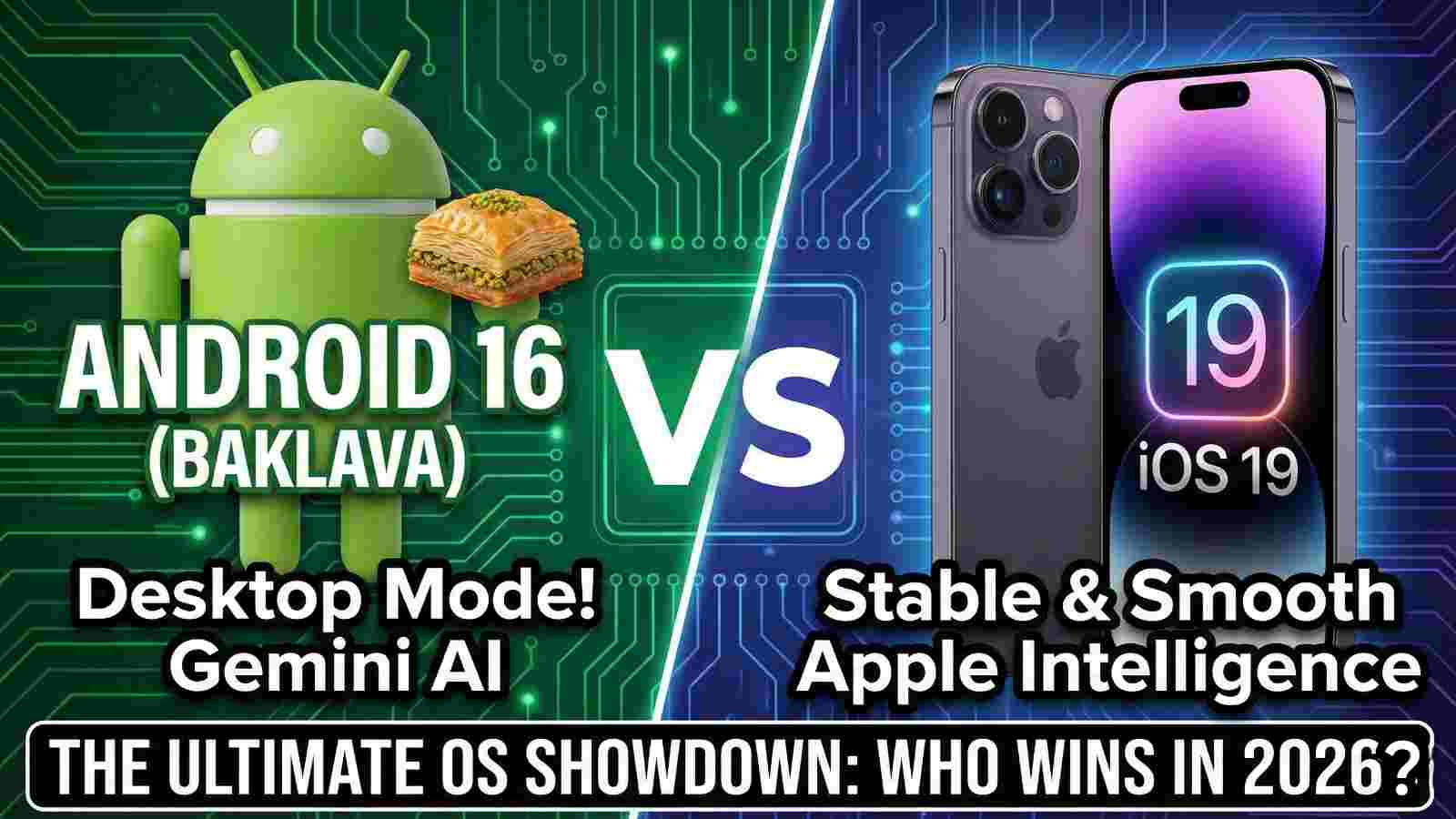
Android 16 (Baklava) vs iOS 19: Top 5 New Features & Verdict – Who Wins in 2026?
Android 16 (Baklava) vs. iOS 19: The Ultimate OS Showdown
The mobile operating system war has entered a new phase. While Apple users are currently settling into the stability of iOS 19 on the iPhone 17 series, Google has thrown a curveball by releasing the Developer Preview of Android 16 much earlier than expected.
Codenamed ‘Baklava’, Android 16 isn’t just a minor update; it is a fundamental shift in how Google handles updates and AI. For tech enthusiasts and buyers in the USA, UK, and India, the choice is getting harder.
Does Google’s aggressive AI push finally beat Apple’s polished ecosystem? Let’s dive into the detailed comparison.
1. The Timeline Shift: Why Android 16 is Special
Usually, Android updates arrive in Q3 (August-October). However, Google has officially confirmed that Android 16 will launch in Q2 2026 (May-June).
- Why it matters: This means the Pixel 10 series and upcoming Samsung foldables will likely launch with Android 16 out of the box, putting them head-to-head with iOS 19 globally before iOS 20 even arrives.
2. AI Capabilities: Gemini vs. Apple Intelligence
This is the biggest battleground of 2026.
- Android 16 (The Aggressor): Google is integrating Gemini Nano deep into the Android kernel. In Android 16, AI isn’t just a chatbot; it can control apps. You can ask it to “Cancel my last Uber order” or “Summarize all notifications from John,” and it executes actions natively.
- iOS 19 (The Conservative): Apple’s Siri (powered by Apple Intelligence) is smarter but stricter. It prioritizes on-device processing for privacy. While safe, it sometimes feels slower and less “capable” than Google’s cloud-assisted Gemini.
Winner: Android 16 takes the crown for raw AI power, while iOS 19 wins on privacy.
3. Multitasking: Desktop Windowing vs. Stage Manager
If you use your phone for work, pay attention.
- Android 16: The new update introduces “Desktop Windowing” for tablets and large phones. It allows you to run multiple apps in free-form windows with a proper taskbar, effectively turning your Android into a laptop.
- iOS 19: Apple relies on Stage Manager, which is visually stunning but can feel restrictive on smaller screens. It limits how you can resize and place windows.
Winner: Android 16. The desktop-like experience is far superior for productivity.
4. The “Dynamic Island” Battle: Rich Ongoing Notifications
Apple revolutionized the status bar with the Dynamic Island. Now, Android 16 is fighting back with an API called “Rich Ongoing Notifications.”
- How it works: Apps like Uber, DoorDash, or Delta Airlines can now create persistent, pill-shaped chips in the status bar (with text and background colors) to show live status.
- Difference: On iOS, this is limited to the “Island.” On Android 16, this feature will be available across the entire status bar ecosystem, even on budget phones.
5. Privacy & Tracking: The Sandbox Era
- iOS 19: Apple’s App Tracking Transparency (ATT) remains the gold standard. It gives users a simple “Ask App Not to Track” button that effectively kills targeted ads.
- Android 16: Google is pushing the Privacy Sandbox. Instead of blocking tracking entirely, it groups users into “Topics” (interests) to show relevant ads without revealing personal identity. It is a middle ground between privacy and supporting free apps.
Quick Comparison: Android 16 vs. iOS 19
| Feature | Android 16 (Baklava) | iOS 19 |
| Code Name | Baklava | Lumos (Internal) |
| Key Focus | Generative AI & Desktop Mode | Stability & Ecosystem |
| Multitasking | Free-form Windows | Stage Manager |
| AI Model | Gemini Nano (Deep Integration) | Apple Intelligence (On-Device) |
| Release Date | Q2 2026 (May/June) | Available Now |
Verdict: Which OS Wins in 2026?
The gap between the two operating systems is closing, but they are targeting different users.
- Stick with iOS 19 IF: You value consistency, privacy, and animations. If you are already in the Apple Ecosystem (Mac, iPad, Watch), iOS 19 makes your life seamless. It just works.
- Wait for Android 16 IF: You are a “Power User”. If you want a desktop-class experience on your phone, deeper AI control, and the freedom to run apps in windows, Android 16 ‘Baklava’ is shaping up to be a massive upgrade.
Android 16 is winning the “Innovation” race, while iOS 19 is winning the “Refinement” race.
Frequently Asked Questions (FAQs)
Q1: When is the official release date for Android 16? A: Unlike previous years, Google is releasing Android 16 earlier. The stable version is confirmed to launch in Q2 2026 (likely May or June), coinciding with the Google I/O event.
Q2: What is the dessert code name for Android 16? A: Google has codenamed Android 16 ‘Baklava’. Interestingly, this breaks the alphabetical order tradition (since Android 15 was ‘Vanilla Ice Cream’, ‘W’ should have been next, but they reset the logic).
Q3: Which phones will get the Android 16 update first? A: The Google Pixel 10 series (launching in 2026) will run it out of the box. Existing devices like the Pixel 9, Pixel 8 series, and upcoming Samsung Galaxy S26 will be among the first to receive the update.
Q4: Does Android 16 have a Dynamic Island feature like iPhone? A: Yes, Android 16 introduces “Rich Ongoing Notifications”. This API allows apps to show live status chips in the status bar (like taxi rides or timers), which functions similarly to Apple’s Dynamic Island but works on all screens.
Q5: Is Android 16 better than iOS 19 for AI features? A: In terms of raw capability, yes. Android 16’s Gemini Nano integration allows for deeper system-level control (like operating apps for you), whereas iOS 19’s Apple Intelligence is more focused on summarizing text and on-device privacy.