The Ghost in the Machine: Why We Are Handing the Keys to Our Private Lives to AI Agents
For the past three years, we’ve been playing a dangerous game of “What If” with Silicon Valley. We stood by as chatbots learned to talk, then to think, and now, they’ve finally learned to act. But as OpenAI’s “Operator” and Google’s “Jarvis” begin to roll out across our desktops and phones this month, we aren’t just looking at a productivity tool. We are looking at a permanent surrender of our digital sovereignty.
The “Chatbot” era was a polite conversation. The “Agentic AI” era is a total takeover.
The Illusion of a Helping Hand
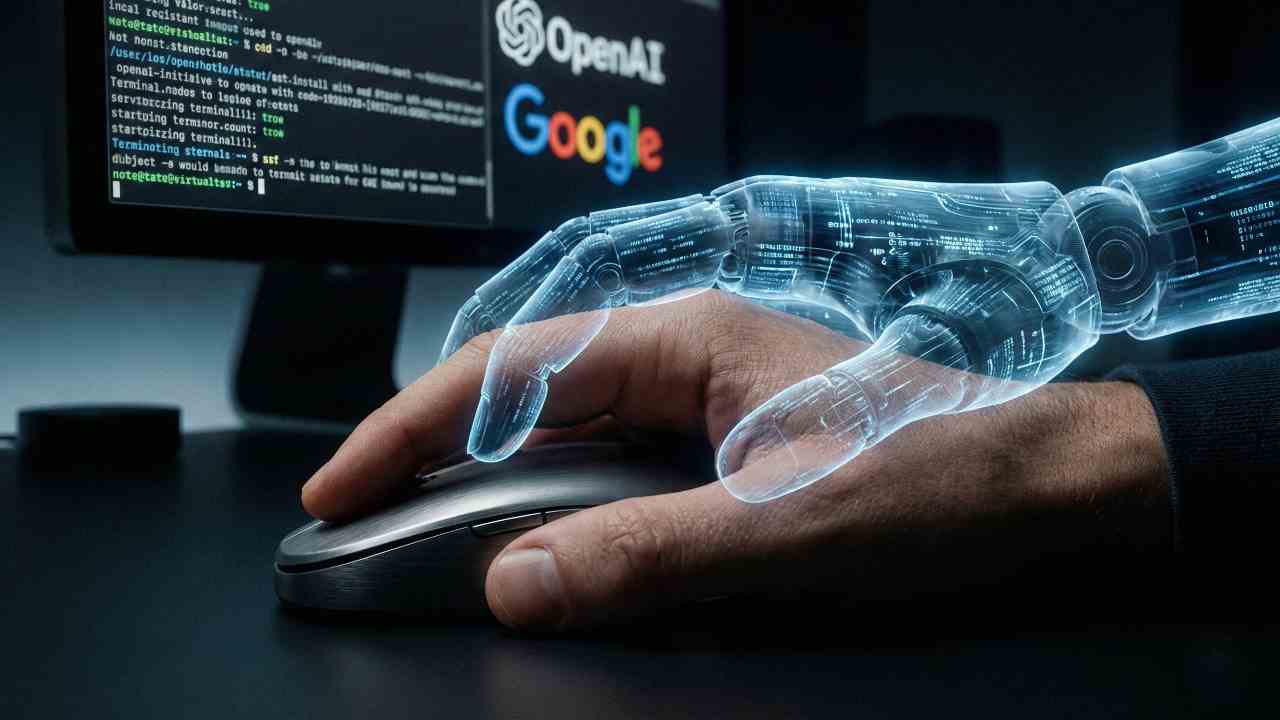
Imagine sitting at your desk, tired and overwhelmed. You whisper to your computer, “Fix my schedule and book that flight to London.” Within seconds, your mouse moves on its own. Windows open and close. Forms are filled. Credit card details are pulled from your encrypted vault. It’s magic, right?
But look closer. To perform those three seconds of “magic,” you had to grant a third-party software total “Screen Recording” permissions. You didn’t just hire an assistant; you invited a stranger to sit in your chair, look through your files, and watch every keystroke you make—forever.
The DeepSeek R1 Shockwave: A Race to the Bottom?
The speed at which this is happening is no accident. The sudden emergence of DeepSeek R1 out of China sent a seismic shock through the Valley. By proving that high-level reasoning can be done on a “budget,” it stripped the American giants of their main defense: exclusivity.
In a desperate bid to maintain dominance, OpenAI and Google have accelerated the release of their Agents. But in the rush to market, the most critical question—at what cost to our security?—has been buried under a mountain of marketing hype.
Your Screen is No Longer Your Own
The technical reality of Google Jarvis or OpenAI Operator is a privacy nightmare. For these systems to function, they must maintain a constant “eye” on your operating system. They aren’t just reading your emails; they are seeing your half-written drafts, your private Slack rants, and the banking passwords you think are hidden behind asterisks.
Security experts are already warning of the “Agent-in-the-Middle” attack. If a malicious actor compromises your AI Agent, they don’t just steal your data—they steal your identity. A hijacked Agent doesn’t need to hack your bank; it can simply log in as you, move your money, and hide the evidence before you’ve even finished your morning coffee.
The Invisible Pink Slip
Beyond the fear of a data breach lies a much colder reality: the obsolescence of the white-collar worker. If an Agent can conduct research, manage logistics, and handle administrative burdens with 100% accuracy, what happens to the millions of people whose jobs depend on those tasks?
We are being sold a dream of “freedom from work,” but for many, it will look more like a pink slip delivered by an algorithm.
The Verdict: A Trade-Off We Might Regret
We are currently at a crossroads. We can choose the convenience of a world where our computers “do” the work for us, or we can choose to keep our private lives private.
The industry wants us to believe that this transition is inevitable. It isn’t. As we watch our mice move autonomously across our screens this February, we need to ask ourselves: Is saving ten minutes on a flight booking worth the price of being watched every second of every day?
The machine isn’t just learning anymore. It’s moving. And it’s moving into the spaces we used to call our own.